If you are environmentally minded and live as ‘greenly’ as possible, it may be important for you to consider how your death and funeral wishes will affect our planet.
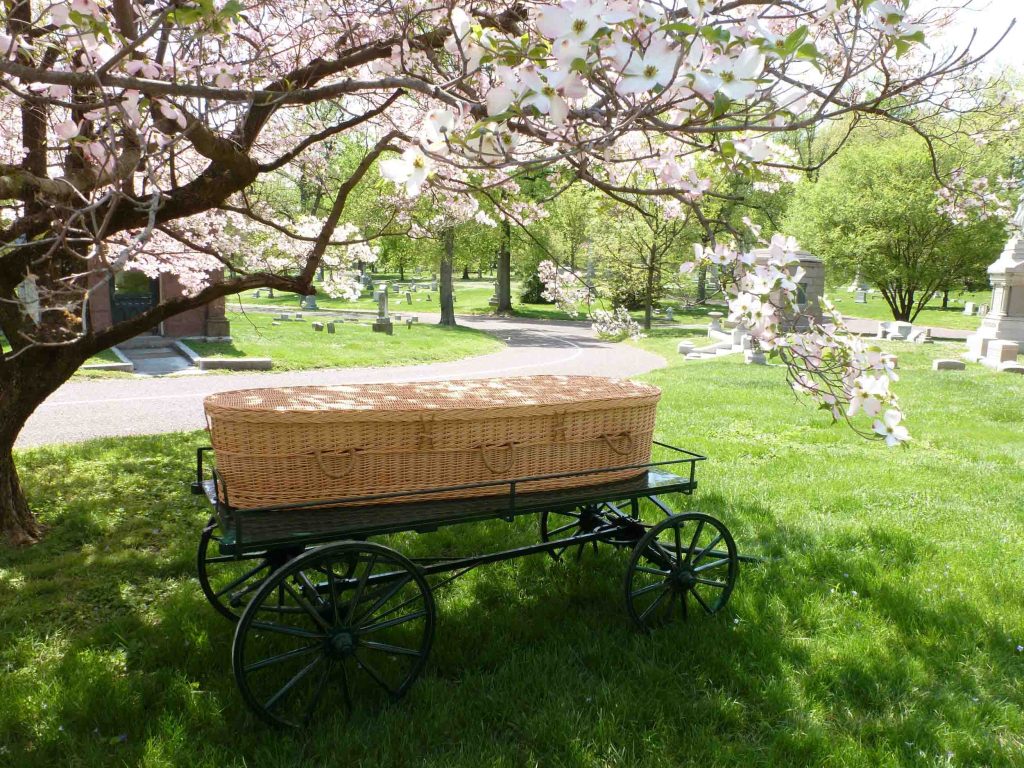
Natural burials are the most environmentally friendly option, avoiding embalming prevents chemicals entering the soil and groundwater, using biodegradable materials such as natural willow or jute coffins (both of which we provide) are also important factors in lessening your carbon emissions and returning your body naturally to the earth. In Northern Ireland we do not have a natural burial ground, however Churches and Council Cemeteries are becoming mindful of habitat management. Using a wooded grave marker or etching a locally sourced memorial stone are great alternatives to an imported granite stone with a high carbon footprint.
Direct cremations are a cost-effective alternative to natural burials. Direct cremations do not require the body to be embalmed, so there will be no use of chemicals. Usually, the deceased will be dressed in a simple gown, this can be made of natural materials and coffins can be made of a renewable material such as jute or a very light recycled wood lessening the impact compared to an oak or veneered wood coffin. As there is no ceremony or service during a direct cremation single use items such as floral tributes and paper hymn sheets will not be used reducing the carbon footprint. Although in the United Kingdom and Ireland most crematoriums are gas powered, they run at a constant temperature each day to service all cremations so the carbon footprint needed for a direct cremation during this time will not be considerable.
Traditional funerals including burial and cremation will have a broad impact on the environment, the use of chemicals in embalming, the use of wood, plastics and metals in coffin manufacturing, single use items such as fresh flowers or hymn sheets and traditional diesel hearses and limousines for the transportation of the deceased and their family. For religious or cultural reasons some environmentally conscious people may wish to have a traditional funeral, as is their right, we would encourage these people to look at how they can make their service less impactful on the environment, we have used wildflower hymn sheets which can be planted by mourners to grow flowers to encourage wildlife in their gardens. Small changes like these are important to consider.
What’s next? Making your wishes known is key in ensuring your Funeral reflects your life, call me to arrange a no obligation appointment to discuss your final journey.
Andrew Milne Dip FD
07702496267
andrew@milnefuneralservices.co.uk